
In the world of complex wheelchair prescription, we throw around words like features and specifications all the time. They show up in quotes, supplier discussions, trials, and funding applications. However, despite how often they’re used, these terms are not interchangeable. Misunderstanding them can lead to misprescription, poorer outcomes, and frustration for both therapists and families, and ultimately lead to delays in funding.
In my clinical work and education, I often see therapists confidently identifying what a wheelchair does (its features), but struggling when it comes to articulating the exact parameters needed to meet a client’s goals (the specifications). Understanding and being able to articulate features and specifications will aid in AT prescription and clinical justification to funding bodies. So, let’s break it down using powered mobility as our clinical example.
Feature: What the product has
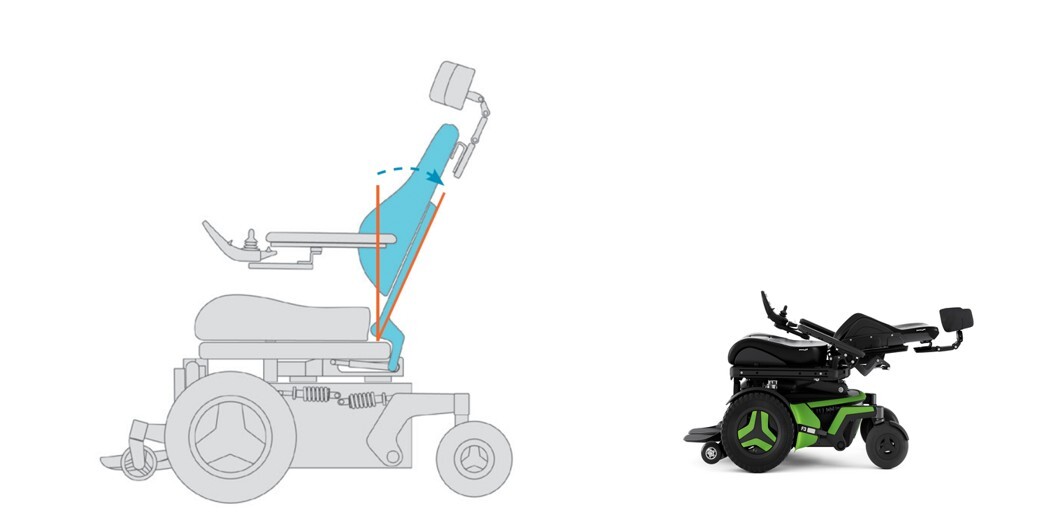
A feature is a built-in function or capability of a wheelchair or seating system.
Think of features as the “what it is” or “what it can do.”
An example of this could be:
- Tilt-in-space
- Power recline
- Mid-wheel drive base
These describe the capabilities of a system, not how those capabilities must be configured or how they function for an individual user.
Clinical Takeaway: This is the first step required in the clinical reasoning process.
Specification: The details of the feature that make it clinically appropriate and is individual to a specific product
A specification is a measurable, exact parameter that defines how a feature must perform to meet the user’s clinical needs.
It answers: “How much? In what way? At what setting? How is it configured?”
Taking our example from a feature into a specification could look like:
- Tilt-in-space → 50° posterior tilt with a minimum of 5° anterior tilt
- Power recline → Backrest angle range from 90°–150° with shear reduction
- Mid-wheel drive → Turning radius of ≤ 65 cm for indoor access
Without specifications, a feature is just a label. A label does not suit individual goals.
Clinical Takeaway: This is where you take a feature and consider what specific elements does it need to assist the individual meet their goal?
Why This Distinction Matters Clinically
1. Features support reasoning; specifications support justification
Funding bodies, equipment panels, and suppliers all want to know exactly what is required and why.
- Saying “client needs tilt-in-space” is vague. Consider a clearer statement: “client requires 50° posterior tilt for pressure management due to history of pressure injuries which they proactively manage through a 24 hour positioning programming (including the use of posterior tilt)”.
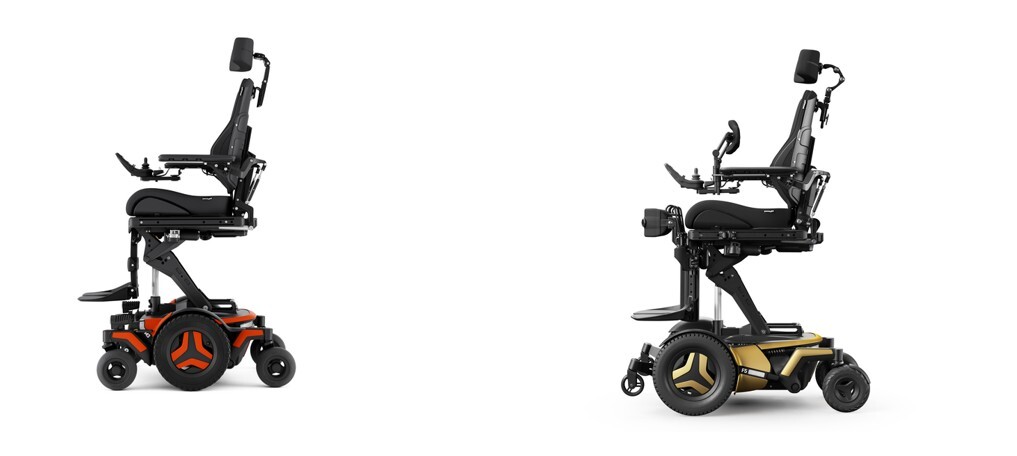
OR - “Client needs seat elevate to improve function” is vague. Instead say “client requires seat elevate of 12” so that they can independently access items in their wardrobe and kitchen cupboards at home. It also enables them to complete their grocery shopping independently and be seen when crossing the road at the pedestrian crossing. In addition, the Permobil F3 does not lock out the suspension when in elevate, which means client x is able to manage curb cuts and still experience vibration dampening. Client has reported that they can spend longer in their chair out in the community due to an increased seating tolerance.”.
Your specifications demonstrate your clinical reasoning. It is essential that you show how you arrived at this reasoning.
2. Correct specifications reduce the risk of misprescription
Two wheelchairs can both claim to have "power recline,” however:
- One may shear significantly
- One may not recline far enough
- One may lack programmable transitions
If you only prescribe the feature, you leave the configuration up to chance. This is what you need to compare in trials or when comparing chairs prior to the trial. It is essential that you seek to understand and develop your product knowledge, not just rely on product sales representatives. You are the one who needs to justify the equipment and show your clinical reasoning.
3. Specifications ensure repeatability across suppliers
Every manufacturer uses different terminology, something we know all too well. Clear specifications allow you to compare like-for-like instead of relying on a brand’s marketing language.
4. It improves client outcomes
When your specifications match the clinical need, the final system is functional, more comfortable, easier to use, and more sustainable over time. It will also ensure that you have remained client and goal focused, prescribing for the individual.
How do you make sure you are implementing this into your practice?
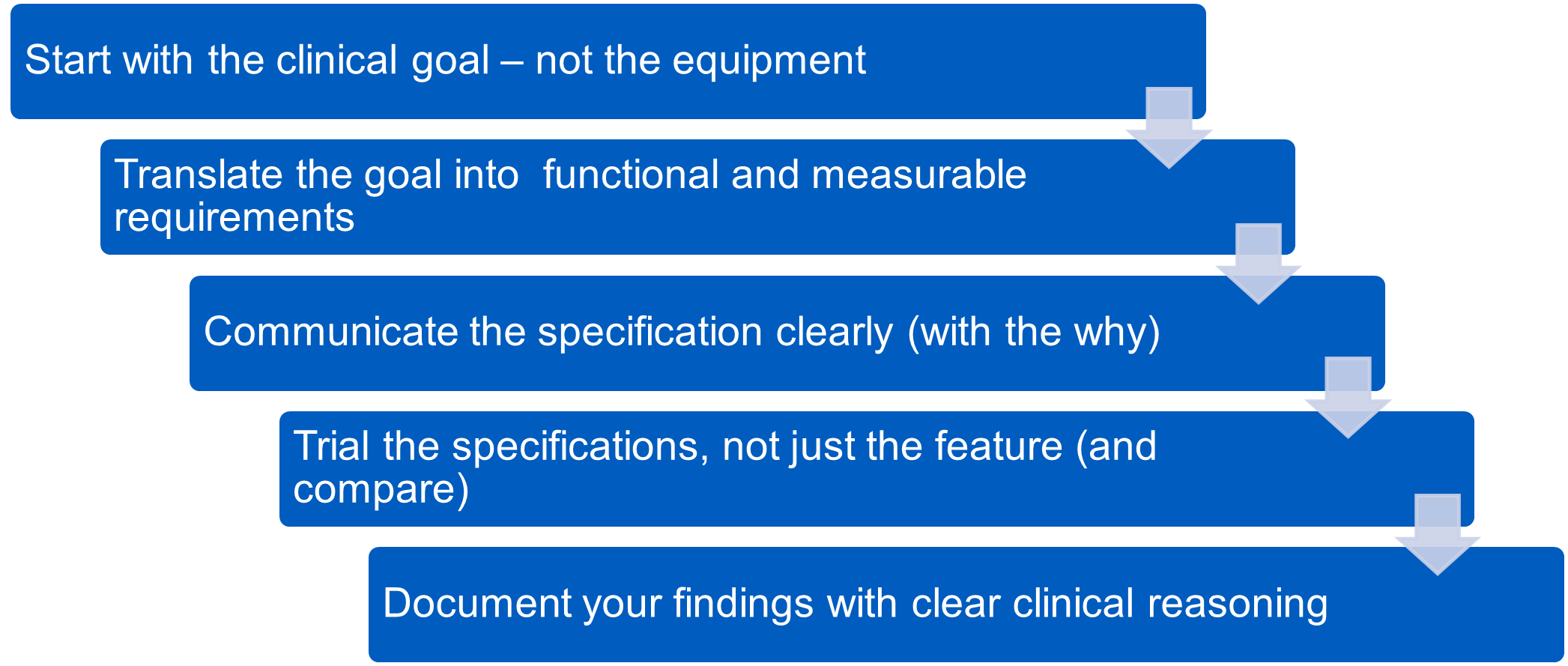
Ultimately, features and specifications are not buzz words. They are key elements to your clinical reasoning and justification of assistive technology. If you can be clear of what your client needs and why, stay focused on the goals – the rest will follow.

Tilly Brook, MOccThy (Hons) (OT)
Director Clinical Services
Tilly Brook graduated from the University of Adelaide in 2008 with a Bachelor of Health Science followed by a Masters of Occupational Therapy (Hons) in 2010 from the University of Sydney. Tilly worked within rehabilitation, working primarily with adults with a brain injury until 2015 when she moved to Singapore. In Singapore, she worked with children and adults at the Cerebral Palsy Alliance School (CPAS). In 2017 Tilly’s clinical knowledge continued as she worked with Mobility Solutions in Auckland, New Zealand. On her return to Australia, Tilly assisted in the development of the Clinical Hub Team at Sunrise Medical where her passion and experience for mentoring and educating therapists grew. Tilly Joined Permobil in January 2022 and is driven to grow therapists, enabling them to be the best therapist they can be.